Category: All Topics

  • Self-Determination

    Self-Determination


    self-determination
    /self-ditərməˈnāshən/ – the process whereby a person can control their own life

    In order to prevent staff from staying away for an extended period when on stress leave, and ultimately lodging a workers compensation claim, I recommend to organisations that we need to intervene early and contact them within the first 48 hours.  

    This contact shouldn’t necessarily be made by somebody from their work area, especially not if the person has an issue with a particular member of the team.  It can be someone from a different area or someone independent altogether.  There just needs to be someone who is checking in with them, asking if everything is okay and if they like to talk about it.  

    These individuals need someone to listen to their story, not someone who is going to take sides.  

    They might say they are unhappy with their manager or someone else and, in reality, the manager might not actually be doing anything wrong.  That individual may just be really stressed by the situation they are in and misconstrue what is happening in the work environment.  Realistically, it doesn’t actually matter – the individual who has the problem needs to be heard and feel validated about their perspective.

    Such an approach will give the individual a sense that they are valuable to the organisation, and whether they return to that specific work environment or not, your organisation is still going to benefit from them remaining within the business.  If people are excluded from the workplace, their mental health is going to deteriorate.

    There are different rules and regulations, depending on what state you are in, about the obligations we have to remain in touch with individuals who are on stress leave.  Generally, regardless of the obligations, many managers report feeling uncomfortable about reaching out to that person, in fear they are going to make the situation worse or will not know how to deal with the person’s perspective, the information they may provide, or their mood.  

    Alternative support options

    I often recommend that organisations, especially larger organisations, set up a range of alternatives for contacts that these individuals can speak to in the early stages of stress leave.  There may be a team of external counsellors or providers that the individual can access facilitated by the organisation or there might be an Employee Assistance Program (EAP). Perhaps your organisation could consider if there is an alternative way of providing an individual access to funding that enables them to access whatever support they might need to help them recover from this stressful situation and return to work.

    We all want to support validated therapeutic processes provided by counsellors or psychologists, but for some people, those options may not work for them.  They may just need access to de-stressing through natural therapies or massage, acupuncture or attending a mindfulness course.  

    Certain areas of science might say that these options aren’t ‘valid’, however we shouldn’t be judging what is valid or not for an individual.  Rather, we need to allow the injured worker to determine what approach is best for themselves. Self-determination for their own recovery.  This approach enables the individual to feel they are being supported by the organisation to get better in whatever way works for them.  

    Need for Self-Determination

    If organisations utilised this approach, I believe that we would find far fewer people would then take the next step and submit a workers’ compensation claim.  

    In Australia, a lot of the workers’ compensation claims are made because there is no acceptance of differing perspectives.  We are insistent that we find somebody at fault and this approach often places a person in a defensive position which can manifest as overt aggression or silent stone-walling.  This process exacerbates the injury by forcing the person to defend their experience and due to our history of the concrete thinking applied in our ‘black and white’ legal system, we don’t give the individual any opportunity to have self-determination in what it is that they do to recover.

    The concept of self-determination has become better known through our approach to Indigenous affairs in Australia. We support indigenous peoples self-determine what is required to improve outcomes for themselves and their community.  

    I believe that if we took this approach with our employees, we would find that they would feel more empowered in their own recovery and would return to work quicker.  Ideally, we would give them ample opportunity to access the help that they needed without getting to the point of needing to make a workers compensation claim. 

    Self-Determination does work!

    If you’re not sure about the validity of such an approach, just have a look at what Victoria Police implemented about 18 months ago.  Pre-COVID, they put in place a fund for individual members to access up to three months worth of support to access therapy, in relation to any area of their life, without needing to seek approval and without it forming part of their personnel record.  

    We know that when we give people the option to access the support that they need for themselves, and provide them a range of options to support their recovery, they feel more in control of their challenges.  This approach empowers them to feel validated by the organisation and, in turn, their recovery. 

    I can’t stress enough, how important it is to give people the opportunity to have a sense of autonomy over their recovery.

    Reframe . . . Respect. . . Recover!

  • Malingering

    Malingering


    malinger
    /məˈlɪŋɡə/ – Pretending to be ill in order to escape duty or work

    I hear the term thrown around at lot, particularly when I work with HR teams who have people on workers compensation.  I find it challenging that many HR managers believe that there are many people who malinger. 

    As a person who talks about how we might approach workers compensation differently, my brain can’t help but question the assumption.  Are they really malingerers?  Or are we operating on an assumption because we think people should return to work in a specified timeframe?  If they don’t comply with that timeframe, we assume they are malingering.

    From a psychological perspective, if I am trying to assess behaviour utilising the DSM criterion for whether someone is truly malingering, the decision-making process is actually quite challenging and fraught with difficulty.  There are certain decision points where the absence of information leads to an assumption that a person is lying.  At every point of a decision tree, you expect an option of yes or no – however, in this type of assessment my only option is ‘Yes’, leading to this person is a liar. Then my only decision is what ‘sort’ of liar!  It is completely biased, and I believe that it unreasonably assumes that the person is guilty until proven innocent.

    I find the whole notion about malingering to be quite overused in many organisations. 

    Years ago, I worked with Centrelink and many of my co-workers would become very cynical about people who walked in the door.  I decided that if I ever reached the point where I felt that everybody walking in the door was there for a reason that wasn’t real or valid, it was time that I moved on.

    I think this happens in a lot of organisations.  We get used to hearing about people who are off on workers compensation leave, especially if you work in a HR area, and it is very difficult to determine who is legitimate.

    But I wonder why it matters.  Why do we feel the need to judge people and their circumstances? I find that if you approach people with dignity and respect and take what they tell you on face value, then people are just pleased that somebody is listening to them and taking time to understand what their challenges are.  They really do appreciate the fact that these people are willing to help them.

    I wonder whether this perception that we have of ‘malingering’ is just that, a perception.

    It’s time to bust the myth!

    2020 has given us a great example of how we need to react to situations when we believe that it will cause bigger problems.  COVID-19 itself is invisible, but we know that it is dangerous for us and our community.  

    What if we accepted that anybody who has to go off on workers compensation must be really unwell and truly have a psychological or physiological injury.  Then we could treat them with the same respect that we would if somebody told us that they had to stay home because of COVID.  We can accept that there is a real and present danger to this person’s mental or physical health if they were to return to the workplace.

    What if we approach them as if everything that they said was true, because that is, after all, their experience? 

    I wonder if that would make a significant enough difference that we would stop believing that people are making workers compensation claims because they think it’s ‘easy money’.  I have worked with many claimants and there is absolutely nothing easy about it. In fact, it is probably one of the most demoralising experiences a person can go through and the process itself could create a traumatic injury.

    I want to challenge you to try approaching these people differently.  Accept what they are telling you is their reality.  As a fellow human being, they deserve respect and encouragement for having the courage to stand up for themselves, in the face of a system that treats them like a criminal.

    Reframe . . .  Respect . . .  Recover!

  • Passion in Your Career

    Passion in Your Career

    One of the biggest things we may need to consider our work environment, and why perhaps we may be having some issues in the workplace, is about passion. 

    Often when you become successful in a particular role, we have a tendency to just decide we are going to just sit pretty for a while. We acknowledge that we have worked hard to get there and you’re doing great stuff and don’t want to push yourself out of your comfort zone – after all, you deserve the break. 

    After a while, just sitting pretty can actually be a disservice to ourselves. This complacency, can lead us to find our situation becoming stale. If you don’t have a continuous input of passion for the work you do, it becomes drudgery and not something that we wake up excited for every day, but instead you find yourself dreading the idea of going to work.  

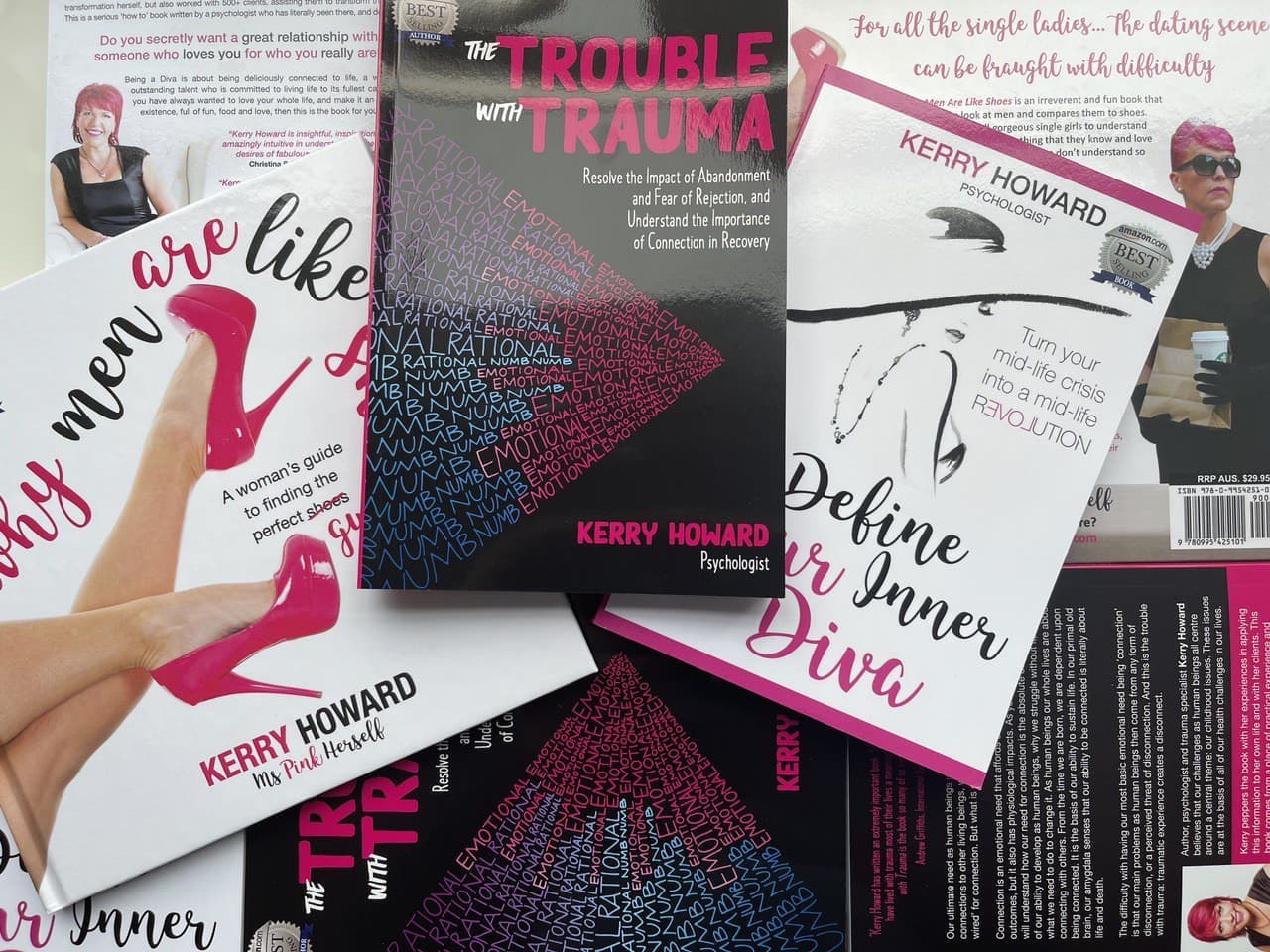
    If you’re in this situation, I would recommend you read through the Career chapter ‘Decisive Diva’ in my book ‘Define Your Inner Diva’. In this chapter I talk about the importance of passion, and what it is you need to do if you’ve lost this passion and want to get it back.  

    One of the reasons we end up having problems in mid-life is from problems in the workplace. For example, if one day everything was going great in your project but then something happens, or you feel that there is an issue at work and you got the blame for it, and you suddenly feel ostracised or disconnected in some way from the other people in your work environment. This can have a big impact on our sense of self. 

    The main reason this has such an impact on our sense of self, if because of the way we grew up and our negative belief system. Once we become adults, we decide ‘I’m going to be this’, and once I achieve that people will respect me and all my negative beliefs won’t matter anymore’.  

    Feeling Like a Fraud…

    Now this idea works for a while, but after a few years you start to get the feeling that you’re a bit of a fraud and not presenting your true self. You may believe that if you showed people who you truly were, and how you really feel about yourself, that they would pull you up on it and you may find yourself out on your ear. 

    It’s really important to understand that when something happens in the workplace, we end up in a situation where we have fallen back into our negative belief patterns because we may have lost the foundation for what we have based our positive feelings about ourselves on our work. This can happen when we find ourselves placing our value in what we do, not who we are as people. 

    This is very common, as most people don’t like how they feel about themselves by the time we get to the end of adolescence. At this point we find ourselves questioning what we are going to do with our lives. This can lead to making a decision ‘I’m just going to be (insert career role here)’ and even if you find yourself being very successful at your chosen career path, at the end of the day our career is just what we do. 

    Many of us work very hard and throw ourselves into our work fully, we approach things with an amazing work ethic to prove ourselves to anybody who will take notice and get upset when people don’t notice how much we truly put in, because through our work is how we are defining ourselves and our value. 

    At this point, if things aren’t going well in the work environment, then we start to feel flat and low. Sometimes in our careers, we aim for a pinnacle and then when we reach it we experience joy, but then the feeling of ‘now what’ sets in. Inside we feel like we still need to do something, or work towards something more. This can leave us feeling like we are never happy with what we’ve done. This is why it is so important to acknowledge we are good at what we do, but our work doesn’t define us as a person. 

    Once you can understand who you are and resolve how you feel about yourself, you can get full acceptance of yourself. Then what you do in your career will not become our defining point, but just something else we do that makes us wonderful.  

    I hope that helps…

  • Finances in New Relationships

    Finances in New Relationships

    I thought today I might talk to you about that evil thing called money. In my book ‘Define Your Inner Diva’ I have a whole chapter dedicated to finances, and one of the big things I like to talk about is what happens financially when you go into a new relationship. A lot of what happens with women is that if we have a hard-fought battle in the family court or something similar, you feel like you have lost a lot of security in your finances. This can lead to us ladies going into a new relationship with a fear that it’s going to happen again because we have just been through that hard-fought battle and we’re scared of it happening again.

    This fear can lead to women feeling awkward about talking about financial agreements to protect ourselves going into a new relationship. This can also stem from feelings of guilt about new relationships and the expectation that “it shouldn’t be a problem because we love each other and it should get itself sorted”.

    Finances in a New Relationship

    Despite this fear and guilt, there are a few good reasons why we should agree with our new partner on a financial agreement when you’re going into a new relationship, especially if you have children. If you have children from a previous relationship, it is an important step to ensure that if the relationship breaks down, you will still be able to provide for your family as you need.

    If you are going into the relationship with grown-up children or no children at all, it is still a good idea to discuss a financial agreement with your new partner. Usually this is relevant to people in the 40-55 age category, so a concern for you may not be providing for your children, but a bigger concern would be in what happens with your finances should something happen to you.

    At the end of the day, it doesn’t matter if the relationship is new, long term or you are married, but it is important to cover off the things that will cause your partner grief should (god forbid) something happen to you.

    Forewarned is Forearmed…

    This is why I always say that when you’re going into a new relationship, what you need to make sure you do is cover off what might happen with your finances, in this unlikely event something happens to you, to prevent an entitlement going solely to your partner instead of your children.

    For example, in your superannuation, there will be certain components that automatically go to your partner in the event something happens to you, and you can’t allocate then somewhere else. Often in this scenario, its better to just let that happen and have it go to your partner because they are more likely to get more value from that than your children.

    Then what you want to do is make sure you can cover off (usually through an insurance policy) what goes to your children. I usually advise that a good way to measure what this should be, is that you work out about what your super is and you match that and then say this insurance policy will go only to my children, and superannuation can go to my partner.

    For these reasons, I have taken separate insurance cover to allow me to give this money to my children. A very common thing to happen in a second marriage for example, is that the will says the partner has the right to stay in the family home and the children have to wait until the other party of the couple passes away before they are able to access the house. This is a large contributor to angst amongst some families when it comes to estates and wills following the death of a parent or close family member. Commonly, everyone has their own feelings and opinions about who should get what.

    It is a horrible thing to have to think about ourselves in terms of dollars and cents, but in reality it is just easier to manage the emotional upheaval a little better by making sure we have sorted our financial issues out ourselves, before we pass on.

    I hope that helped…

    Kerry

  • Exercise Rehabilitation

    Exercise Rehabilitation

    This week I wanted to share with you my recovery journey following an injury to my arm. Being with clients most days, I have to sit still and write a lot, which I find can aggravate my injury. Therefore I have decided to make a commitment to myself, and work on getting some strength back into my upper body.

    I hear a lot of people (myself included) saying that they just don’t have time to exercise, focus on our bodies or work on strengthening our bodies. For those of you that have been watching my videos for a while, may have noticed that I don’t talk about exercise from a weight-loss perspective, but one of toning and strengthening your body and what you put in your mouth.

    For me, toning and strengthening my body means managing my injury and helping to ease the pain. This was a huge reason why I decided that I needed to get back into high-intensity interval training again. I started my journey working with a trainer one-on-one and then with small group training.

    Now, I know what you’re thinking. Personal trainers can be expensive and seen as a bit of a fad. For me, this was the best way I was going to be able to work with somebody who understands that I have shoulder issues and why I am trying to rebuild strength in my body. They also are able to provide insight on the best exercises to do to help manage and reduce my pain on a daily basis.

    This training has already been so beneficial. I have noticed that while I am sitting with clients and taking notes, that my pain levels have been a lot more in check and not as intense. While this has helped, it still requires me to take time out and limit the number of people I am able to sit with each day.

    While I have to think about how I spend my time (not sitting in front of computers for too long or sitting with clients for long periods of time) I also have to put time into taking care of my body and being able to focus on how I do certain bits of exercise and what I need to do to give me the best return on the investment of my time.

    Can’t Find the Time? Make the Time…

    I think that one of the biggest things that people asked me when I decided I needed to get back to exercising again was ‘How on Earth am I going to find the time?’. For me, it just got to the point where I realised that by not exercising, I was forcing myself to have more downtime due to the pain. What I decided was, if I made the time to strengthen my body, it would allow me to require less down time and be able to put time into more productive things, rather than laying on the couch with heat packs and complaining about the pain.

    Often we look at fitness or going to the gym as something we do only to lose weight. But we need to realise that we need to exercise to build the strength up within our body and make sure that our body can support us to do the things we need to do, day-in and day-out.

    At the moment, I am fitting in my exercise in the middle of my working day. This helps me ensure I am breaking up my day into small chunks and not getting stuck at my desk. I also find I am still fitting in exercise such as stretching or yoga in the mornings because I know it will help me later when I exercise intensively.

    When I talk to people about making their plan about what they want to do for themselves and how they want to incorporate health and fitness into their life, I make sure they understand that nobody else can tell you how to do it and what will work for you. You really just need to look at your situation and your lifestyle, so you can eliminate your excuses not to do it.

    In my journey, my first step back into regular exercise was joining up at Curves gym. I loved the idea of the continuous circuit so you didn’t have the excuse of ‘I missed the start of the class, I will have to go another day’. This ‘no excuse’ opportunity helped get me into a routine of going regularly. I like to remind everybody that it takes three weeks to form a new habit, so you have to commit to something for a month before it will start to feel like a needed part of your routine.

    When we think we can’t fit something in, think about the things you can substitute instead of just ‘adding’. This will help you utilise time you already have, for something more productive or more useful to your day to day life. It is especially important to your wellbeing to make sure you take time for yourself, because you can’t look after others if your energy cup is empty.

    I hope that helps…

    Kerry

  • Continuous Improvement through Education

    Continuous Improvement through Education

    One of the things we often don’t consider in our career is that it’s never too late to re-educate yourself or to decide that maybe you want to have a career change.  For those of you who have read my book ‘Define your Inner Diva’ in Decisive Diva, the chapter on Career, I talk about undertaking a career review. This is quite an important thing to do because often when we reached that point in our lives where we think that we really don’t like what we’re doing in life and you may feel like you want to do something completely different, but we have educated ourselves to reach our career pinnacle, it seems that picking up and doing something different is entirely too hard.

    In my book, I talk about our seven-year developmental cycles, the first complete cycle ends around 35.  This is often about the time where we reach a point of feeling a bit like a ‘fraud’ in our working life, we often think

    “I don’t actually think I like what I’m doing, who I am or what I’ve chosen to be!”

    We end up chosen to make ‘something’ of ourselves in response to our negative feelings that come from adolescence.  We don’t like a lot of the things that have happened in our adolescence, who we think we are and we come out of adolescence feeling different like we don’t belong.  So, we decide that we’re just going to be “this” in our career and when we actually decide we are going to to be “this thing” we often make choices based on what we think other people will see value in.  For example, if I become a lawyer then my parents will be really proud of me. Often our parents influence what we decide that we want to do for a career as an adult and so you do something because they want you to do it and not necessarily because it’s something that you’re really interested in, or passionate about.

    As a result, by the time we hit that last seven-year cycle between 28 and 35, there’s this feeling that can start to build within us that says “Actually, I don’t think I like what I’m doing.  I don’t think I fit. I don’t think I’m passionate about it. I don’t think I’m really that interested in it. I feel like a bit of a fraud around these people and I don’t really belong and I don’t know what I want to do anymore!

    At this point, many of us think “It’s too late!  Bad luck… You’re just gonna have to suck it up and stick with it!”  However, this is often the time that I say to people that it really is an opportunity for you to decide that you want to do something different.

    Choose a Different Life…

    For me, it was at 28 that I decided to go to University and start on a completely different career path and study psychology.  I started studying when my youngest was one. I then spent 15 years of my life studying part-time, whilst working full-time, to get my degree finished and getting through my internship.  Trying to jump through all of the hoops necessary to get me to a point where I could sit here and have this validity that says I understand human behavior and therefore I can talk about it and work in that space every day.  It was hard!

    I’m not going to sit here and tell you that studying part-time for 15 years, whilst working full-time and raising two children, the majority of that time as a single parent, was easy…  It wasn’t! But, it was what I really wanted to do as it was my passion and for me, it was something that I felt that I couldn’t just turn my back on, or I knew that I was going to spend the rest of my life unhappy.

    It wasn’t that my career was bad, I was happy enough in the job that I was doing and I had done reasonably well for myself in my work, but it wasn’t fulfilling me.  It wasn’t making me feel that when I woke up every day, that I wanted to leap out of bed and go to work. It was a job and it was needed security for me at the time, and as a sole parent, it was one of those things that I needed to do to ensure I could meet my responsibilities.  Sometimes we have to make those sacrifices, but I really wanted to do something that would change our long-term outcomes as a family.

    I did this for my daughters, as much as for myself, and I wanted to make sure that I did something that would make me feel fulfilled.  Something that would make me happy, as opposed to doing something that just paid the bills or made the people around me think I was an okay person.

    If there is one thing that I would encourage you to do, it is to realise that it is never too late to decide that maybe you would like a career change, that you would like to do something that really does fulfill you, much more than what you are doing now.  So, if that sounds like something you want to explore, just consider short courses in adult education, no one said it has to be a big commitment to a degree.

    I never stop learning.  I’m off next week to do some training and it’s not always about psychology.  I often like to learn about other things, different areas of interest, if I think that it might help me or influence the way that I look at things.  I’m always open to education as knowledge isn’t heavy and it doesn’t cost us anything to carry with us, it is weightless and it’s not a burden to carry…  It is just something that can assist us to move forward.

    I hope that helped…

    Kerry

  • Vibrational Energy

    Vibrational Energy

    We are going to talk about the need to understand the order of the things in our life and how energy flows around us. The different energy elements that we have in our life, but also how energy flows between people. There was an interesting study that came out of Harvard University that looked at quantum physics and talks about the vibration of emotion.

    In my book “Define Your Inner Diva”, in the last chapter on Spirit called ‘Dharma Diva’, I discuss the difference between ancient Chinese belief systems and the ancient Indian belief systems.  Both of these ancient systems have four areas of life that they focus on – Birth Traits, Physical Movement, Traditional Medicines and the Order of Things.  

    Why is that important?

    The Harvard University study talked about the impact of emotion and how emotion vibrates at different levels.  Shame vibrates the lowest, being very heavy, followed closely by fear.  Interestingly this Harvard research actually shows that shame is the lowest vibrating emotion that we experience.  Alternatively, if you look at joy and gratitude, they vibrate right up there next to love and almost the point of enlightenment.

    Why is it important to understand how emotion impacts?

    You would have heard it before, you are a product of the five people you spend the most time with. If you are spending time with people who are vibrating at a very low level, it’s heavy – fear, shame, guilt, then all of that really negative stuff you are feeling around yourself, your life and the way that it looks in the future – would be quite different to what happens if you spend a lot of time with people who are celebrating joy, laughing and having a great time and experiencing that connection with other people that we love to hang out with.  Even through our friends, just communicating that really positive vibe with each other – that is a vibrational connection that is a measurable emotional vibrational connection.

    This, to me, was just so profound!

    Remember, a few weeks ago, I talked about the movie ‘Resilience’?  It’s like this research from Harvard University gave me the missing piece to the puzzle!  I’m so excited because I get to incorporate that information into my new book, which I’m calling “The Trouble With Trauma.”  This is an essential component to understanding ‘how’ that vibrational element impacts how we do things when we interact with other people.

    How do we replenish?  How do we give that energy back to ourselves?  How do we find the things that bring us joy, that lift us into that emotional space so that we are operating up high and not down low.  How do we ensure this happens in conjunction with the people we regularly connect with.

    In the book I talk about yoga, spending time in the ashram and the vibrational things that I do when I am there – which produces much the same feeling.

    Another option to consider is dancing, tapping into music and recognising that the vibration of different types of music, like house music (I know you wouldn’t all listen house music!).  Have you ever observed how a DJ can actually make the level of the music escalate up and up and up?  This is usually based on the the repetitions in the music, in terms of the beats per minute in the music and they build it into this ‘big thing’ and people feel it in their bodies – that’s really important!

    When you replenish your spirit, you are trying to tap into those things that make you feel good about you.  It is those things you can feel.  You can feel it when you are walking into a room of people and it feels really heavy and revolting. You’re just kind of like ‘Oh my goodness!  What happened? Who died?’.  

    You want to recognise when it’s really positive and spend time trying to make things more positive…  So, spend time with those people who make you feel more positive.

    This week go and hang out with five people who make you laugh and if you can’t find ways to laugh with somebody else, then search YouTube for a favorite comedian, or just do something that lifts your mood.

    Whatever you do, don’t be sitting there just watching the news…  That’s not helping!

    I hope that helped…

    Kerry

  • The Trouble With Trauma

    The Trouble With Trauma

    Most people don’t really understand what trauma is…

    I’m always talking to people about the impact of trauma in their life. I was talking to a specialist last week and she said, “So when are you going to write a book about trauma?” I said, “Funny you should ask because that’s what I’m doing now.” Then I got to thinking about one of the challenges I am currently facing, which is in creating my diagram to work to show why certain elements of my key theory are so important and how they interact.

    My theory around trauma is that our primary emotional need and number one thing that we all need and strive for in life is a connection. A connection is vitally important to us as human beings.

    This vlog explains the premise behind Kerry’s new book ‘The Trouble With Trauma’.

    Our whole life we seek to connect as human beings. We want to try and connect with other people – first with our parents, siblings and extended family. Then we go to school and want to connect with our school friends, and then later in life its other friends, work and intimate relationships that form our important connections. These different points of connection within our lives are what make us feel good about ourselves.

    In my previous book ‘Define your Inner Diva’, I talk about the need to connect with ourselves, to assist in understanding that our negative belief system develops from how we see ourselves. This is a big thing that we need to resolve within us before we can form the ideal relationships we crave, the success we want or the financial freedom we desire.

    It is not uncommon to underestimate the impact of our negative experience

    When looking to resolve our negative belief system, I like to look at why we don’t feel good about ourselves as people. Common reasons for this are because we could not get the connections we craved throughout our childhood, or we could not get the connection in the way we were expecting. This is where trauma comes from – trauma is the essence of disconnection.

    Our primary emotional need is for Connection… Trauma is anything that creates a Disconnection

    When you think about the things in your life that are traumatic for you, the things that make you feel bad about yourself such as feeling rejected, that is the trauma causing a disconnection. Perhaps you were abandoned, and that is what has led to the feeling of rejection to arise.

    When we can’t get a connection the way we want it, then we look to change the way we connect with other people. Our primary experience from childhood is expecting that we will connect with people in a strong and positive way. For example, you may have had a relationship with your mother that was loving and full of care, or you may have had a relationship where she made you emotionally responsible for how she felt, or you may have had no one at all who seemed to care or was aware of your presence. These different factors are going to impact how you choose to connect going forward in your life.

    If you reflect on how you were able, or unable, to have the connection you craved with your parents, this will lead you to understand the way you enter into adult relationships. If you had a negative experience of connection in childhood this can lead to feeling like you want to push people away and keep them at a distance because “they will leave anyway”. In this situation, you feel that no matter how tight you hold onto them, you feel that you can’t trust people to stay around. If, on the other hand, you had positive and nurturing connections in your childhood, you will be more willing to openly connect with people and be able to trust them as you want too.

    An example of this impact I like to look at is a TED talk by Brene Brown who looks at vulnerability from the perspective of the “wholehearted”. She talks about how there is one group of people who are really happy living their life and allow themselves to be vulnerable, which in turn, allows them to form positive connections with others.

    Being vulnerable allows you to open areas of yourself up, to allow people to see things about you that may result in them rejecting you, however, it usually results in making you feel closer to others through that vulnerability. Being vulnerable allows us to be open and make way for people to truly love us for who we really are and form the strong positive connections we desire and enable us to live our most luscious life.

    I hope that helps…

    Kerry