Category: Trauma

  • Why Supporting Your People is Essential to Your Business

    Why Supporting Your People is Essential to Your Business

    When we are trying to mitigate risk for psychosocial injuries in our business, it is essential to know how your organisation supports your people. It is crucial to your business success that you do. This includes looking at the opportunities you have created for them to provide feedback.

    When assessing your risk for psychological injuries, we include questions about ‘Your People’ in our scorecard assessment. It is important to understand how you engage with your people and look at the avenues you have to obtain feedback about how they feel working for your organisation.

    Gain Insights Through Anonymous Feedback

    It is a useful component to your strategy to obtain anonymous feedback, in addition to other forms of feedback. Asking your people for feedback in a way that enables them to be anonymous provides us with great insight into what they think. The opportunity to be anonymous enables people to feel more confident and tell you their true feelings, as they feel protected by the anonymity. Staff Survey’s are usually anonymous, but your staff survey should never throw you any ‘curve ball’ surprises!

    In addition to formal anonymous surveys, you need to provide informal ways of getting the pulse of your organisation on an ongoing basis. This includes multiple open lines of communication that allow people to report concerns in multiple ways. All organisations need reporting processes that are broader than the immediate line manager, especially if the line manager is part of the issue.

    We also look into the ‘hidden’ indicators of dissatisfaction, including rates of unplanned leave and capturing information about workers compensation claims. This should include all claims, regardless of whether they are for a physical or a psychological injury.

    By assessing rates of leave, we can examine any patterns that may indicate a problem in a particular team or area of your organisation. There is a lot of data in varying systems within your organisation that can be consolidated into an early warning system – the data doesn’t lie.

    Presenteeism

    The other measure of dissatisfaction is presenteeism, people not being focussed or productive. If you have ways of measuring output, regularly monitoring these will give you insight into an underlying feeling of discontent.

    Most work areas will have KPIs, and depending on the work, there are expectations of output. However, depending on the type of work that your business delivers, it can be more challenging to observe lost productivity. At some point, it can be useful to benchmark the time that varying tasks take, so that we can have clear expectations regarding output.

    Taking the time to assess output is something that many organisations claim that they “don’t have time” to do. However, as your organisation starts to expand, it is essential that each new role has clear duties and expectation targets for each task. Each role needs to have a clear goal and link into the overall strategic direction of the business, the goal needs to be clear even if the pathway to achievement isn’t yet clear.

    A lack of clarity and ownership of the outcomes is guaranteed to create presenteeism in any organisation.

    Exposure to Risks and Workers Compensation

    If your rates of workers compensation claims are high, do you look at if there are any commonalities? Either particular sections or people in the organisation that are exposing you to more risk? Are there particular work types in your organisation that appear to be a higher risk?

    It’s important to know that regardless of the source of the injury, a person can develop a secondary injury if things are not well managed. A physical injury that results in a person being isolated from the workplace, or ostracised in any way, can result in a psychological injury – so these need to be effectively managed.

    We have access to a lot of data about our people, but we don’t think about synthesising it to provide us with an early warning system about their health and wellbeing.

    Managing Difficult People

    Our people are the number one asset in our business. If you fail to look after them you will find it challenging to grow. From making better choices in recruitment processes, to responding quickly to mediate challenges between staff members, there are several areas that we can manage better to reduce the risk of needing to manage difficult people.

    I often hear managers lament the time it takes to manage ‘difficult’ people, but perhaps they wouldn’t become problematic if we worked things better. Especially after the past two years of the pandemic, looking after our most significant resource should not be viewed as a chore – it’s essential to the success of your business.


    Want to know if your business is at risk? Take our assessment and see your scorecard today.

    Reframe . . . Respect . . . Recover!

  • Prince Harry and Trauma

    Prince Harry and Trauma

    Recently I had an article released in The Canberra Times talking about “The Me You Can’t See”, the combined Oprah and Prince Harry mini-series which discusses mental health, including Harry’s own experiences which lead to him taking his wife and family and leaving the UK.

    Back in February, after the Duke and Duchess of Sussex aired their initial interview with Oprah, I prepared an article in response to something I had read in the New York Journal from Bessel van der Kolk, the author of “The Body Keeps the Score”.  Bessel van der Kolk is a psychiatrist who is well-known for his trauma expertise, and normally I would say that he speaks a lot of sense.  I met him in Spain almost a decade ago, and he has previously shared a lot of wisdom in his approach, especially about the physical manifestation of trauma in the body.  However, in this particular article, I was really surprised because Bessel claimed that just because Prince Harry had lost his mother, this was no guarantee that there was any traumatic impact.  I was shocked! I just couldn’t believe what he was saying. 

    Of course, the death of Prince Harry’s mother was going to have a traumatic impact on him

    Prince Harry’s story makes perfect sense.  He hates the UK media with a vengeance because, in his mind, they are the ones that are responsible for his mother’s death. The way he views it, they murdered her.

    Is he ever going to have a great relationship with the tabloid media?  Of course not. 

    The approach taken by Bessel van der Kolk was really surprising.  Sometimes individuals in certain professions spend an awful lot of time trying to validate their intellectual position on it, rather than actually looking at the experiences that people have as reasonable, and expressing empathy for those experiences.

    Harry was watching his wife being chased around by the media, in the same way that they used to pursue his mother when he was a boy.  Is that triggering? Absolutely.  Does it cause issues?  Of course it does! He became distressed, feeling like he was going to lose another woman in his life and he couldn’t protect her. It all makes perfect sense.

    Prince Harry talks about using EMDR Therapy to process his traumatic experiences, making everything feel better

    You can tell that EMDR Therapy has been effective for Harry, especially when you compare the way he speaks in comparison to others, including Oprah and Lady Gaga in ‘The Me You Can’t See’. When Harry speaks about his traumatic experience, his demeanour is quite different to when Lady Gaga, Oprah or others in the series open up about their mental health challenges.  While many can be seen to be still highly emotional about their experiences, Harry is able to recall his experiences calmly and with clarity. That’s not great editing, that is how EMDR Therapy processes the negative emotions associated with the traumatic experience.

    The Duke of Sussex supports that attitude that I have spoken abut for many years, which is the need to support humanity to build mental resilience.  That is the reason I developed the Mental Muscle Method 12-week program looking at building psychological awareness and increased resilience. This method is focussed on how we prepare people for emotional challenges or difficulties and provide them a range of strategies that assist them to build self-awareness to help them move through it and get on with life.

    Reframe . . . Respect . . . Recover!

  • Mental Fitness

    Mental Fitness


    mental fitness
    /mɛnt(ə)l fɪtnəs/ – a personal framework for understanding how to build wellbeing and having a positive sense of how we feel, think and act

    It has only been over the past decade that I have focussed more on my physical fitness, to assist with my health and wellbeing, and manage my injuries.  Going to the gym multiple times a week helps me to gain and maintain strength and reduces my pain experience from injuries that I sustained over 15 years ago. 

    In order to be accepted into frontline service organisations, you must be physically fit.  There is an expectation that you will maintain fitness even as you get older, as it is always expected you can meet certain minimum fitness criteria.

    This is perfectly understandable considering the role itself requires quite a lot of physical fitness.  When fighting a fire, you may have to stand with the hose for lengthy periods of time.  Or as a paramedic, you may have to lift someone onto a gurney.  Police officers may have to chase a perpetrator down.  We know that these roles require a certain level of physical fitness.

    However, we also know that these roles expose individuals to traumatic experiences, leaving them in a place of psychological vulnerability.  We participate in physical fitness, requiring minimum standards and ongoing work to maintain them.  So, why don’t we also practice mental strengthening exercises?  Training and regular exercises that support us to understand our risk from exposure to traumatic events and how to minimise this risk.

    We need to provide individuals with a mental skills toolbox!

    To support physical fitness capacity, we usually follow a program.  We have personal trainers; we watch what we eat and how we sleep.  We can engage in high energy activities like High Intensity Interval Training (HIIT) or lower intensity exercise like Yoga or Pilates.  There are a variety of forms of exercise that can improve and maintain physical fitness and we know that these roles require a minimum level of fitness and we require people to maintain that in order to stay in the job.

    We know that people in certain industries are going to end up with psychological challenges because of the work they do.  What we don’t seem to understand is that there is a range of mental fitness exercises and tools that they should engage with post exposure. 

    As an industry, emergency services personnel have been told that their physical health is highly important and must be maintained.  Yet, their mental health is not even considered until after it has noticeably deteriorated, usually long after the exposure has occurred.  In many cases, the status of a worker’s mental health is not observed or addressed until the individual is in a state in which they are no longer able to work.

    This is not to be disparaging of any organisation. 

    From a psychological perspective, we have only looked at mental health from a reactive position, what to do once these people are broken, to help them heal.

    There is a lot that we can do to help them recover, however, there is so much more that we can do to intervene earlier in the process.  We can help our workers to become mentally fit before they get exposed to traumatic events and help them maintain that fitness.

    When we consider rehabilitation for physical injuries, they may take a few weeks out of the gym, engage with some physiotherapy, then get back to exercise ASAP to build up muscle strength.  So why don’t we help people to understand the same concept can be applied when we are recovering from a psychological injury?

    There are so many things that we can do to help people build mental fitness and prevent them from developing post-traumatic injuries.  It is frustrating that we don’t do more to help our people build mental fitness and organisations are missing a significant opportunity to improve the capability of their people.

    Just as we expose ourselves to new ways of training our physical body, we need to understand that there are new ways of being able to train our psychological mindset as well.

    Reframe . . . Respect . . . Recover!

  • Sexual Assault

    Sexual Assault


    sexual assault
    /sek-shəl -ə-ˈsȯlt/ – illegal sexual contact that usually involves force upon a person without consent, or is inflicted upon a person who is incapable of giving consent

    Over the last few weeks, there has been a lot of focus in the media about sexual assault, especially when women are waiting a significant period of time before making a report. 

    Delays in reporting sexual assault are not uncommon.  Many women feel unable to speak up when the assault happens, especially if it has occurred in their work environment, or in a country town or small community. They often feel so ashamed that they struggle to find the inner strength to report.  This phenomenon is exacerbated exponentially if women are intoxicated in any way.

    Unfortunately, society still places the blame on women for sexual assault. 

    It is really hard to believe that 50 years after the ‘so-called’ sexual revolution, Australian women are still being chastised for being too attractive or available late into the night.

    It is unreasonable to believe that by being intoxicated, a woman’s decision making ability would be so significantly impaired that she couldn’t know whether or not she wanted to engage in sexual intimacy.  Many high level men in our country have implied that if a young woman were intoxicated then maybe they don’t remember that they said or did things that implied that they did want a sexual interaction. 

    Is it any surprise then that women find it difficult to report sexual assault in Australia?

    Despite the fact that they feel that their body was violated in a way that was unwanted, they feel ashamed by the belief that somehow they were to blame because they were intoxicated by alcohol or other drugs.

    They blame themselves thinking if they had not been intoxicated, then this may not have happened to them.  We have this perception, and there is reasonable truth to it, that our inhibitions are impacted by drugs and alcohol and we could have been more forthright if we had not consumed anything.

    This is a major issue for our society in general, because having a couple of drinks does not give anybody an excuse to claim that they didn’t know what they were doing, or that they didn’t recognise that they were doing something that was unwanted.

    Sexual assaults happen in many ways, but the responsibility for the unwelcome attention should not be placed on women.  As a socialist democracy Australia supports equality under law, yet the responsibility for sexual assault still seems to firmly rest upon women and asking the question of whether or not they said ‘No’!  Why don’t we ask men whether or not a woman said ‘Yes’?

    I find young people appear to have greater emotional intelligence and seem to be more aware of the importance of consent.  They have better clarity around a ‘code’ that if someone is intoxicated, then you don’t make a move.  It is considered really ‘poor form’ with many young people if you were to be seen taking advantage of somebody who was intoxicated.

    Women are entitled to feel safe in their own community. 

    It does not matter if they are dressed attractively or if someone perceives them as ‘sexy’.  This isn’t an excuse.  It does not give people the right to step past a certain boundary.

    Rather than asking whether or not a woman said no, we should be asking whether she explicitly said yes!  The more we educate men to understand that unless they get an explicit “Yes, this is okay”, then it absolutely is not.  And we cannot stress that enough!

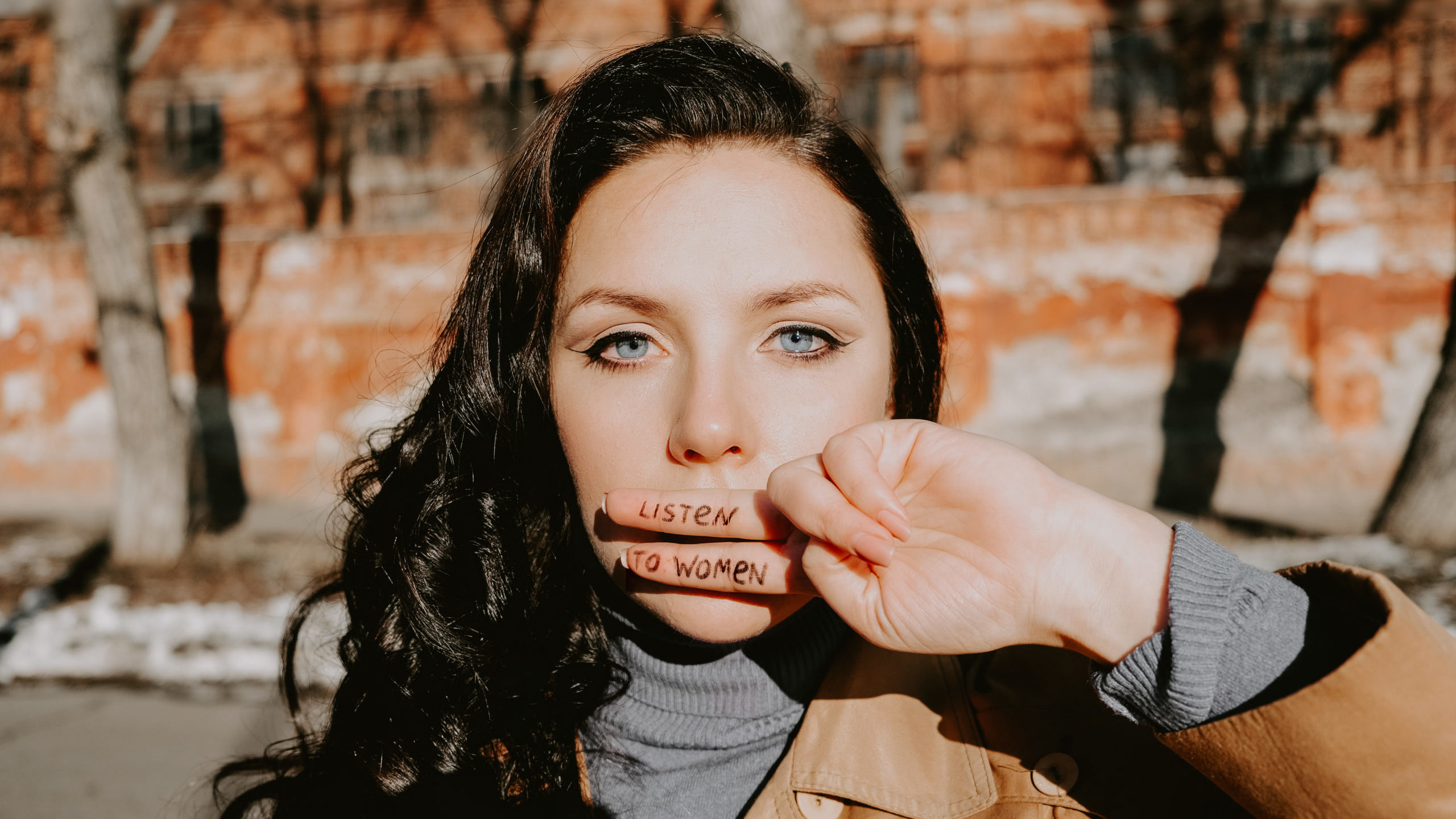
    It might be time for a YES Movement.  That men require a #YES2UNDRESS

    A movement that encourages women to be open and say “Yes, I agree that this is something I want to do” or it doesn’t happen.  We need to flip the onus of responsibility to one that says unless explicit consent is given, then it is an automatic no go zone.

    This is not an easy topic.  It raises quite a few issues for many women who have found they have had their bodies imposed upon.  It does not matter how they were dressed, where they were, what time of day or whether they were intoxicated.  None of these factors gives anybody an excuse to take something that does not belong to them. 

    If you need any support with regards to anything I’ve discussed today, please reach out to your rape crisis centre or any other form of counselling support.

    It is time that we learned that unless there is a ‘Yes’, then it is automatically, ‘No’!

    Reframe . . . Respect . . . Recover!